
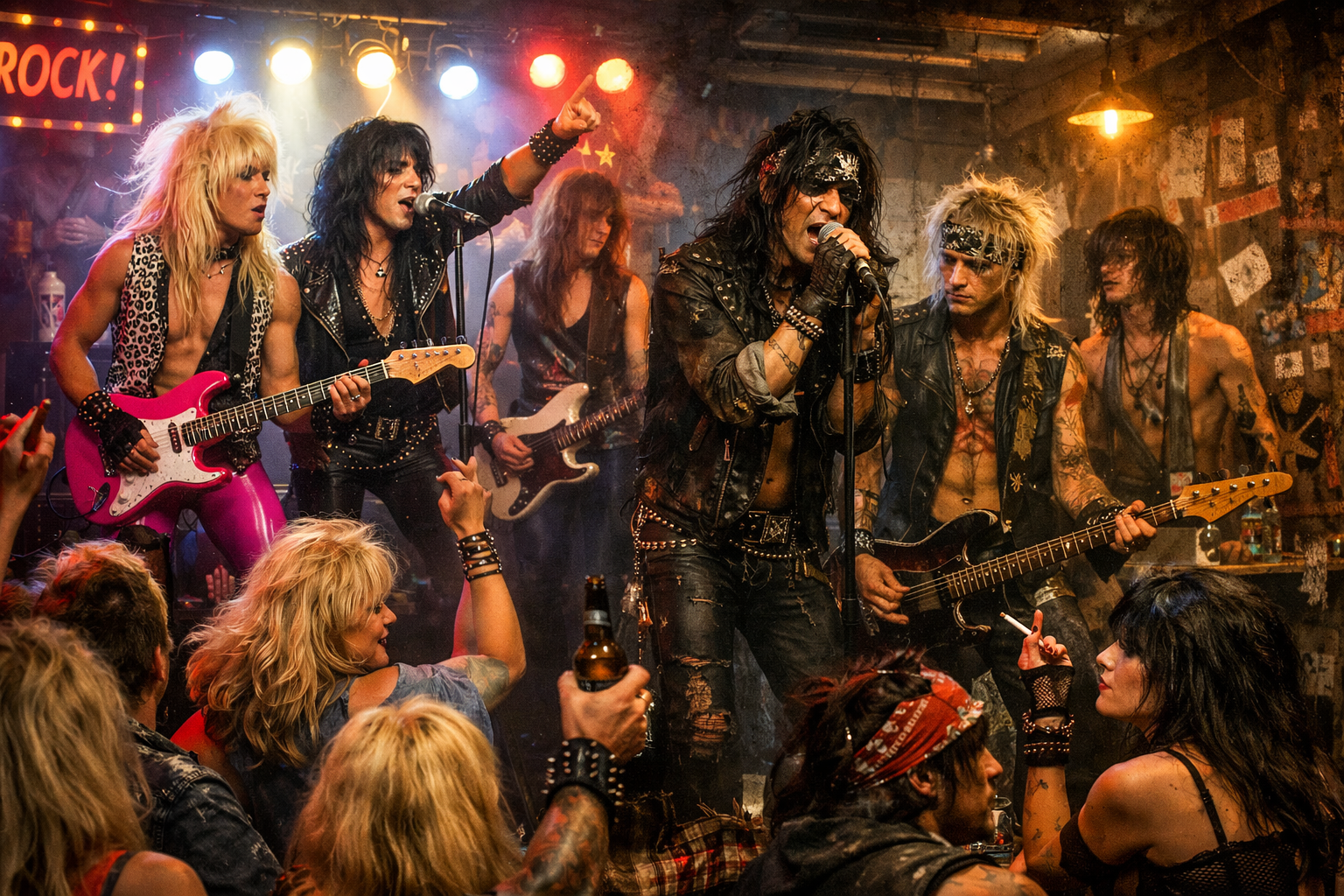
The 1980s were all about style and flair, very similar to sleaze metal, right? Hair Metal and its grittier, underground counterpart, Sleaze Metal. These two subgenres defined an era of rock ‘n’ roll excess, but they approached the party from opposite ends of the Sunset Strip.
Whether you’re a fan of the polished, radio-ready anthems or the raw, street-level snarl, understanding the key differences between these styles is key to appreciating the full spectrum of 80s hard rock. Let’s tease up our hair, crank the volume, and explore the flash, the filth, and the unforgettable music.
What Is Hair Metal (or Glam Metal)?
Hair Metal, often used interchangeably with Glam Metal, exploded in the 1980s as a mix of hard rock, heavy metal, and glam rock showmanship. It took the big riffs of 1970s metal bands like Van Halen or Kiss and fused them with catchy, radio-friendly hooks and a visual style borrowed from 1970s glam icons such as David Bowie and T. Rex.
Key features of Hair Metal include:
- Slick production: Albums were often polished and radio-ready, designed for mass appeal.
- Catchy hooks: Almost every song had a memorable chorus, with singalong energy fit for arenas.
- Visual flash: The genre got its “Hair Metal” nickname from the teased hair, makeup, leather, and spandex that defined the look.
- Party themes: The lyrical focus was on good times, sex, nightlife, and living fast.
- Power ballads: Nearly every band had one, softer, emotional tracks that broadened their fan base.
Bands like Bon Jovi, Poison, Def Leppard, Motley Crüe, and Warrant became household names, dominating MTV and radio. The sound was bright, confident, and built for mainstream success, even rebellious bands were marketed to sell records and fill stadiums.
What Is Sleaze Metal?
Sleaze Metal emerged as a dirtier, grittier underground cousin of Hair Metal. It had the same love of sex, drugs, and rock ‘n’ roll, but instead of shiny production and clean-cut hooks, Sleaze bands leaned into the raw, street-level feel of early punk and garage rock.
It was less about arena anthems and more about the attitude, a sound that came straight out of the L.A. clubs rather than corporate boardrooms.
Key traits of Sleaze Metal include:
- Raw sound: Production was rougher, guitars were fuzzier, and vocals were snarling or sneering.
- Punk influence: Many Sleaze bands were influenced by punk rock’s rawness and simplicity.
- Darker lyrics: Songs often focused on the gritty side of nightlife, drugs, broken love, dirty streets, and self-destruction.
- Underground appeal: Sleaze Metal didn’t chase radio play as much; it was about living the lifestyle, not just singing about it.
- Authentic edge: Bands like Hanoi Rocks, L.A. Guns, Faster Pussycat, Vain, Jetboy, and early Guns N’ Roses captured that rough, rebellious energy.
The Difference Between Hair Metal and Sleaze Metal
Both genres share the same roots, flamboyant style, rock ‘n’ roll excess, and catchy riffs, but their attitude and execution set them apart:
| Aspect | Hair / Glam Metal | Sleaze Metal |
|---|---|---|
| Sound | Polished, melodic, and radio-friendly | Raw, gritty, garage-like |
| Production | Slick, high-budget studio sound | Lo-fi or intentionally rough |
| Influence | Glam rock and arena rock | Punk rock and street rock |
| Lyrics | Party anthems, love songs, feel-good rebellion | Sex, drugs, decadence, danger, and survival |
| Image | Flashy, colorful, “pretty” | Grimy, leather-clad, and street-tough |
| Examples | Bon Jovi, Poison, Def Leppard, Warrant | L.A. Guns, Faster Pussycat, Hanoi Rocks, early Guns N’ Roses |
In short, Hair Metal was about the fantasy, the big parties, bright lights, and rock star dreams. Sleaze Metal was about the reality, the hangover, the alleyway, and the broken bottle.
Both celebrated excess, but Sleaze Metal stripped away the polish to reveal the dirt underneath.
Leave a Reply